Billing Tenants for Water and Garbage in Kenya

Rent is the easy part.
The tenant knows the number. You know the number. It doesn't change month to month.
Water is where it gets ugly. "Why is my water bill KES 1,400 this month? I was away for a week." Garbage is a close second. "I don't even use the bin."
Most landlord-tenant fights over money aren't about rent at all. They're about the small charges nobody explained properly at the start.
Here's how to bill them so they stop being a fight.
Table of Contents
- First Decision: Flat Rate or Metered?
- Whatever You Choose, Put It in the Lease
- Metered Water: Doing It Properly
- Garbage: Keep It Flat and Boring
- How to Invoice It
- Electricity: Usually Not Your Problem
- Charges and MRI Tax
- The Short Version
First Decision: Flat Rate or Metered?
There are really only two ways to charge for water.
Flat rate. Every unit pays the same fixed amount each month, or it's folded into the rent.
- Simple. Nothing to read, nothing to argue about month to month
- Fair only when units use roughly the same amount
- You carry the risk: if one household fills a tank every day, everyone else subsidises them, or you do
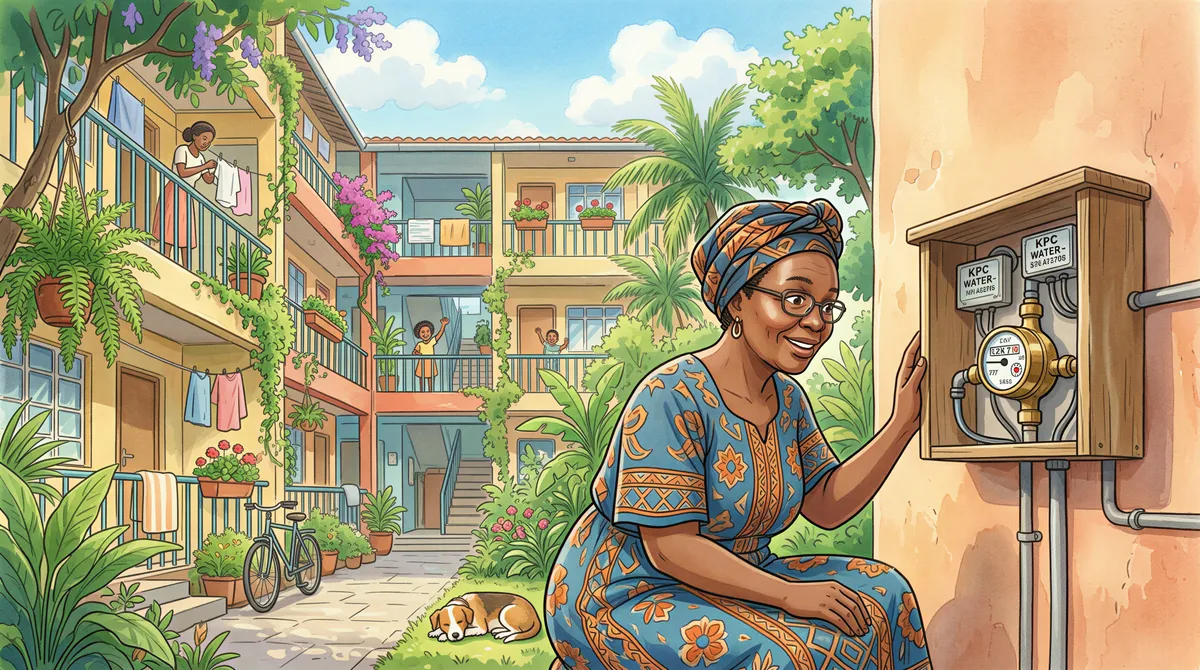
Metered. Each unit has its own sub-meter, and each tenant pays for what they used.
- Fair. Heavy users pay more, light users pay less
- More work: someone has to read the meters every month
- Disputes shift from "why is this so high" to "is the meter reading right", which is a much easier argument to settle with a photo
A rough rule: small units with similar occupants (bedsitters, one-bedrooms) suit a flat rate. Family units, or anything where usage varies a lot, suit meters.
Whatever You Choose, Put It in the Lease
This is the step that prevents most disputes, and the one most landlords skip.
The tenancy agreement should say:
- Whether water is included in rent, flat-rate, or metered
- For metered water: the rate per unit, and how that rate is worked out (what your water bill costs you, divided by consumption)
- For garbage: the monthly amount, and that it's charged whether or not the bin gets used
- When the charges are billed and when they're due. Most landlords add them to the next month's rent invoice
- What happens if the rate changes because your own supplier's price changes
A tenant who signed something that says "water is metered at the rate your landlord pays the supplier" has a lot less to argue about later. If you're drafting a lease, our rental agreement guide covers the rest of the clauses.
Metered Water: Doing It Properly
If you go metered, the system is only as trustworthy as the readings.
Read on the same day every month. Readings taken 25 days apart one month and 35 the next produce bills that jump around for no reason, and tenants notice.
Photograph every meter, every time. A dated photo of the dial ends almost every dispute in one message. Send it with the bill.
Show the working on the bill. Last reading, this reading, units used, rate, total. "Water: KES 1,400" invites a question. "Water: 1,245 to 1,281 = 36 units × rate = KES 1,400" mostly doesn't.
Bill at cost. Divide what your water bill costs you by the units consumed, and charge that. If tenants find out you're adding a margin on water, you lose their trust on everything else too.
Watch for leaks. A sudden spike in one unit is often a running toilet or a burst pipe, not a tenant wasting water. Checking before you bill saves an argument and fixes the leak.

Garbage: Keep It Flat and Boring
Garbage almost never makes sense to meter. Charge a flat monthly amount per unit.
How to set it: take what your collector charges you for the whole property each month and divide it across the occupied units. Say your collector charges KES 3,000 a month and you have 10 occupied units: KES 300 a unit.
Two things to state up front, in the lease and on the bill:
- It's charged every month, including months when a tenant says they barely used the bin. The collector charges you either way
- What happens when the collector raises their price, so the increase doesn't feel arbitrary when it comes

How to Invoice It
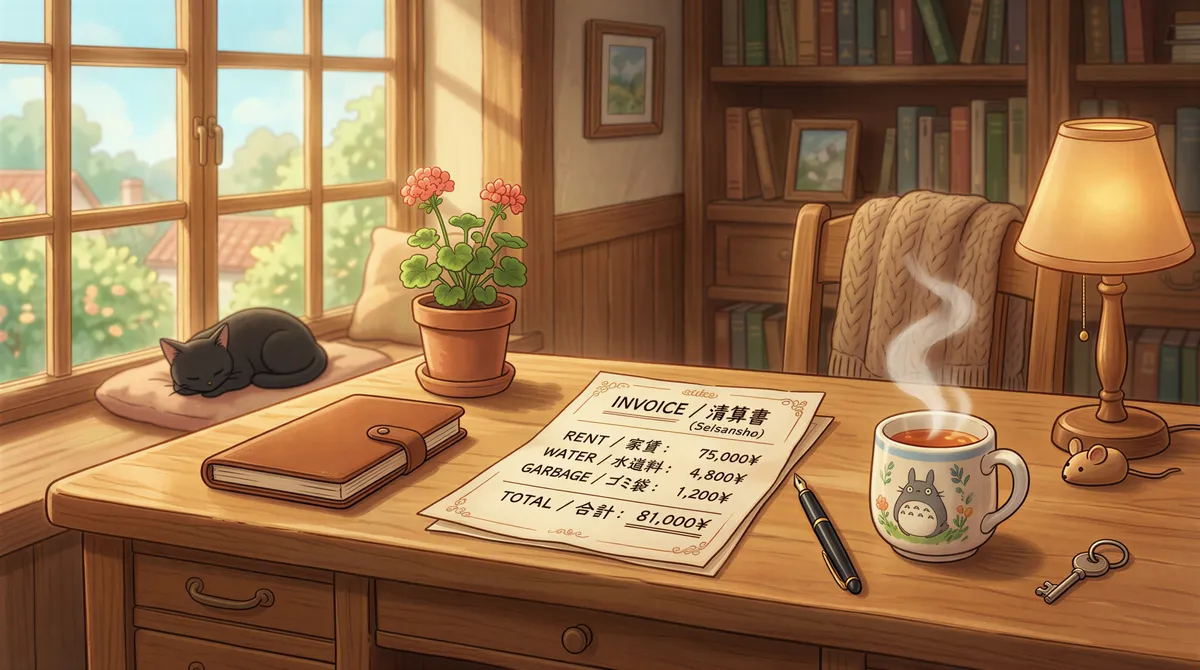
Put water and garbage on the same invoice as rent, as separate lines.
| Item | Amount |
|---|---|
| Rent | KES 15,000 |
| Water | KES 1,400 |
| Garbage | KES 300 |
| Total | KES 16,700 |
Separate lines matter for two reasons. The tenant can see exactly what they're paying for. And when they pay KES 15,000 and not KES 16,700, you know exactly what's still outstanding, instead of a vague "you're short".
That second point is where most landlords lose track. Money comes in by M-Pesa, it doesn't match the total, and three months later nobody can say which charge was never paid. Our guide to handling partial rent payments covers what to do when that happens.
Electricity: Usually Not Your Problem
Most Kenyan rentals have a prepaid token meter per unit, so tenants buy their own electricity and it never touches your books.
If your units share a meter, the same rules as water apply: put the method in the lease, read on a fixed day, photograph the meter, show the working, bill at cost.
Charges and MRI Tax
If you're on MRI, keep these charges clearly separated from rent in your records. MRI is 7.5% of the rent you receive, so you want it obvious which money was rent and which was a water or garbage charge you passed on to the supplier. Separate invoice lines make that easy to show. Lump everything into one "rent" figure and it all looks like rent.
Not sure whether a particular charge counts as rent for MRI? That's a question for KRA or a tax adviser, and it's much easier to answer when your records already keep the two apart.
The Short Version
- Pick flat or metered based on how similar your units are
- Write the method into the lease before the tenant moves in
- Read meters on a fixed day, photograph them, show the working
- Bill water at cost. Margins on water cost you more than they earn
- Garbage flat, every month, split from what your collector charges you
- Separate lines on the invoice, so a short payment tells you exactly what's missing

In KodiSawa you add water, garbage or electricity to a tenant's invoice as its own line, with a note for the meter reading. When their M-Pesa payment comes in, it's matched to the tenant and applied to that invoice, so the balance still owed is always up to date. Try it free for 14 days.
Start Tracking Rent Today
Track every unit, tenant and rent payment in one place. Start your 14-day free trial today.
Pay Bill and Buy Goods integration built in
Manage all your properties from one dashboard
Tax-ready reports for hassle-free filing